
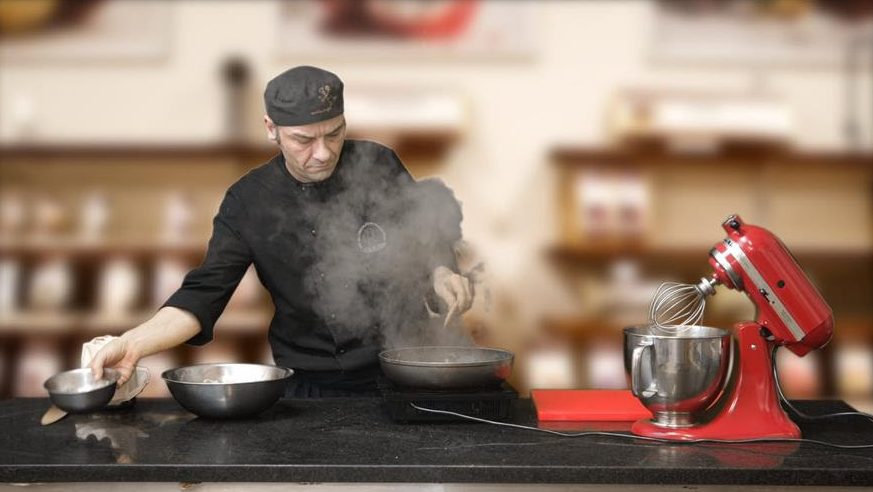
Xocolatl anyone?
No one knows for sure but around 5000 years ago in an Olmec village on the lowlands of southern Mexico someone left some cacao beans either in a pile in the warm sun or in a brew of chicha beer made from the sweet pulp of the cacao fruit.
A curious, hungry Olmec person eating an accidently fermented cacao bean would have noted this once incredibly bitter and astringent seed had somehow become intriguingly moreish.
In another fortuitious accident some of these fermented beans ended up in a being thrown on a fire – the nutty smell of roasting cacao beans aroused more curiosity with the intriguing taste and pleasing bodily effects confirming that the Olmecs were really onto something here.
Ground and mixed with hot water, spices, chilli, flowers or honey this xocolatl drink aka hot chocolate was about to become an incredibly important part of Olmec, Mayan, Mixtec and Aztec cultures.
Incidentally, about three millenia later pretty much the exact same series of accidents would happen when Ethiopian goat herders and Yemenese monks transformed coffee beans into another global beverage.
Okay back in Mexico, Spanish conquistador Hernán Cortés was the first European to drink cacao when he shared a cup with Aztec King Montezuma, who he would later kidnap and murder.
In 1528 when Cortes returned to Spain with Montezuma’s gold he also brought cacao beans and chocolate-making equipment.
The Spanish kept the source of chocolate secret for the next century.
Though there was a near miss in 1579, when gold-plundering English pirates boarded a Spanish galleon and mistook a cargo of cocoa beans for sheep’s droppings.
Bitterly disappointed, the pirates burned the ship and sailed off elsewhere in search of doubloons.
Eventually though word on drinking chocolate got out and by the 1650’s you could find cacao being consumed in large quantities in the chocolate houses of London.
Now the modern industrial age chocolate bars we know and love, which are the dominate form of cacao we eat today are actually relative newcomers on the scene.
They’re also the result of another accidental discovery.
One Friday evening in 1879 Swiss chocolatier Rodolphe Lindt closed up his chocolate factory and went home for the weekend.
Forgetting to switch off his mixing machines he returned on Monday to find that two and a half days of agitation gave his chocolate a very, very smooth and satiny texture.
So much so that Lindt was able to sell his secret technique and recipes to his competitor Johann Sprüngli for $100 million.
A hundred and fifty years later and conching is still the key process in making good chocolate.
It’s certainly not lost on Cocoa Rhapsody’s chocolatier Floyd Millar.
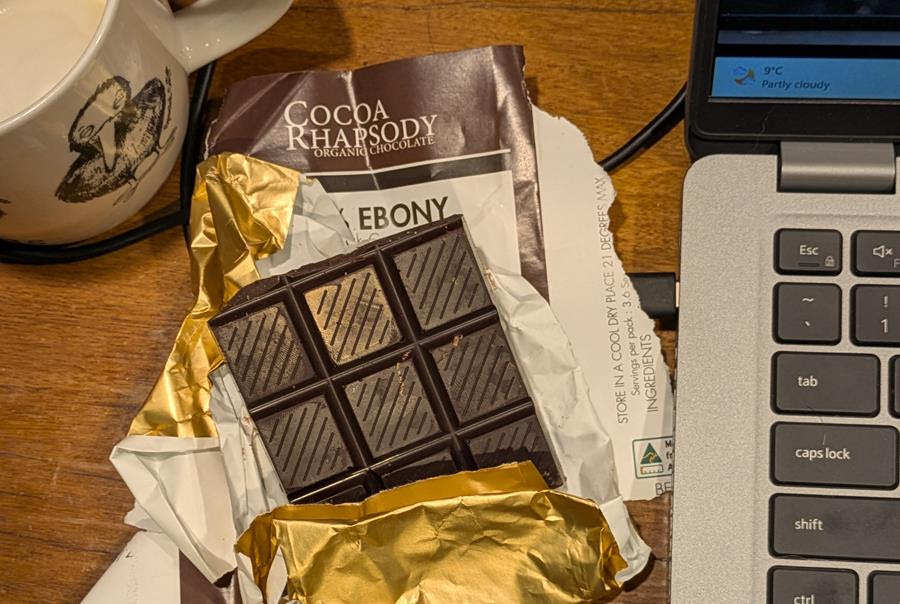
Floyd believes the 72 hours he conches his organic cacao is fundamental to making the super fine Swiss style chocolate he introduced to Melbourne 21 years ago.
I fully concur with Floyd – each week as I write this newsletter I eat about half a bar of his 85% Ebony Couverture.
Cocoa Rhapsody is one of Australia’s best kept chocolate secrets and it’s very hard to find Floyd’s chocolate outside the Victorian farmers market stands he and partner Patricia sell their range from.
You can however find it at Fair Food and this week you’ll find it on a very special special.
Enjoy!
Pick your Park
With your help CERES has made it through to the final round of the $250,000 Pick My Park Competition.
There’s one more vote to get us the shady special gathering places and the beautiful native plantings you’ve told us you’d love to see more of at CERES.
Vote for CERES here (it takes 2 minutes) and please share it with friends and family!
We’ve done this before – back in 2018 six hundred of you voted in the Pick My Project Competition helping build CERES’ magical giant millipede playground.
These projects help transform CERES and make it possible for so many more adults and children to experience and enjoy your unique park.
Have a great week
Chris