Summer snow in Officer
We’re on our way to Fish Creek driving East down the M1 through Melbourne’s outer suburbs when my son comments that Officer is a weird name for a suburb.
I agree, Officer is a weird name for a suburb though it’s history is a very familiar Melbourne story.
Officer began life as a railway siding known as Officer’s Wood Siding, established around 1870 to send timber and firewood into the city.
The siding was named after Robert Officer, son of Sir Robert Officer, a prominent medical doctor and pastoralist.
Officer Jnr had retired to the area and taken up several parcels of land. In 1888 with the trees now cleared the siding bearing his name was shortened to “Officer”.
Around this time the Crown, under pressure to break up large pastoral leases, decided to divide up the Officer district selling it off as small 10-50 acre farms to British and European settlers.
With a rail link into Melbourne, deep, fertile soils, reliable rainfall and a cool foothills climate Officer was deemed ideal for growing apples, pears and stone fruit.
During its fruit growing peak from the 1920s to the 1950s Officer was home to as many as seventy orchards.
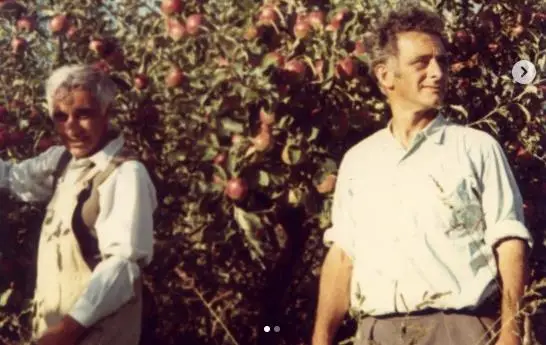
In 1953 Angelo Russo, an Italian migrant, arrived in the area and bought Bellevue, an apple orchard, owned by Diecasters, a steel factory, which used it as a retreat for workers away from their dirty and noisy workshops.
Angelo raised a family at Bellevue and did well sending his apples into Melbourne’s booming wholesale market.
In 1977 his sons Robert and Joe took over Bellevue and continued to grow Granny Smiths and Fujis and introduced modern varieties like Gala, Pink Lady and later Kanzi and Bravo.
Over the next twenty years Officer changed from orchard district to urban growth corridor.
The same story that had played out on Melbourne’s expanding urban fringe for over a hundred years was about come to Officer – rising land values and urban encroachment forces farmers to sell up – rates go through the roof and there’s no land to expand your farm into.
Despite almost all their neighbouring orchards leaving the district, Robert and Joe Russo decided to stay in Officer.
Sometimes the worst thing that could happen to you turns out to be the best thing that could happen to you.
In 1998 just before harvest a severe hailstorm destroyed Robert and Joe Russo’s apple crop.
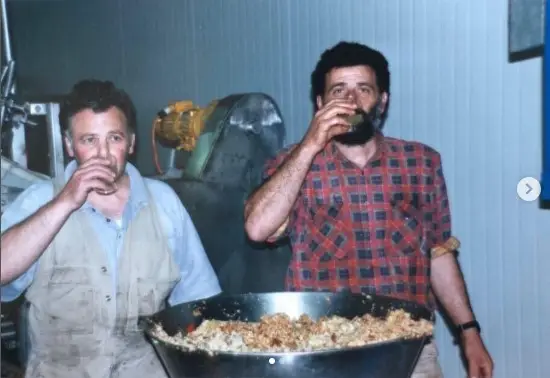
Rather than give up, the brothers bought a second-hand juicing plant in pieces from some family friends which Robert, a mechanic, cobbled together.
They pressed their hail-damaged fruit and created Summer Snow Apple Juice — named after the hail that covered the ground like snow after the storm (the pic above is Robert and Joe tasting the first batch).
It would be Bellevue Orchard’s defining moment.
Family members sold bottles of Summer Snow at farmers markets, local fruit shops and independent supermarkets.
The freshly pressed juice tasted completely different to the concentrated juice that most people drank at the time.
The popularity of Summer Snow Apple Juice grew and grew. In the years since another 17 flavours as well four ciders have been added to the range.
The storm transformed Bellevue from a too-small-to-compete wholesale orchard into a diversified value-adding producer – the timing also happened to match a yearning in people to know where their food came from.
The storm and the change in approach set the tone for Joe’s daughter Bernadette and Robert’s son Nick to take over in 2000’s.
The suburbs had literally spread to Bellevue’s front door so the cousins opened a farmgate and produced more value-added products for their growing number of walk-in customers.
A cafe followed along with seasonal events. These days at Bellevue you can get a decent coffee or a meal, get married, celebrate birthdays, mothers or father’s days, even have your picture taken with the Spring blossoms.
We love the Russo’s story and their juice, which you can now find here at Fair Food.
Have a good week
Chris