Sharing sweet nectar
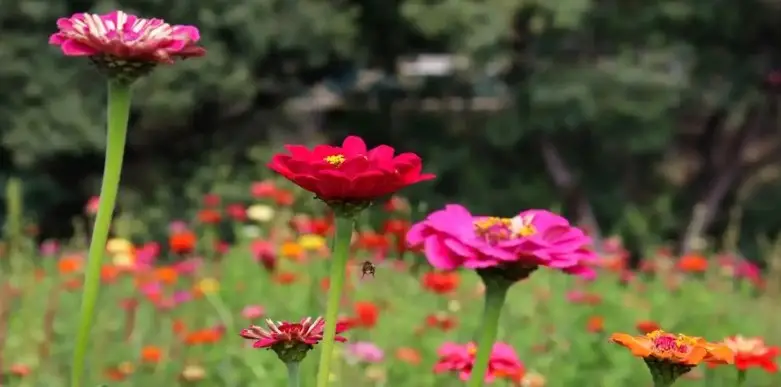
For the next few months at Joe’s Garden in Coburg you’ll be able to pick-your-own flowers including a special sunset pick on Valentines Day.
As a practical young green grocer/farmer type I didn’t really get flowers – nice sure but essentially they were the flashy precursors to the real thing – fruit and veg.
As with most things I thought I knew, I was not just wrong, I was hopelessly wrong.
Land plants have existed on Earth for around 500 million years and for most of that half a billion years mosses, ferns, cycads and conifers had the place to themselves.
Like us humans, flowers didn’t appear on Earth until very late in the piece, but when they did, just a short 100 million years ago, everything changed…
Flowering plants had an entirely different approach to the dominant wind-pollinated pine trees.
They didn’t have to grow for years before reproducing and they had petals that attracted insects who would carry their pollen efficiently from flower to flower.
And, in a counterintuitive yet genius move, flowering plants had discovered reciprocity – by giving out nectar to any insect who visited their flowers they supercharged their reproductive potential.
It turned out that the simple act of sharing sweet nectar would be the biggest thing that happened in the Mesozoic Era (well that and the extinction of the dinosaurs).
Dinosaurs aside – the result of all this exponential pollination was a global floral explosion – suddenly there were all kinds of flowering plants everywhere.
The new flowering plants took reciprocity a step further, encasing their seeds in nutritious and tasty coatings (aka fruit and nuts) which were then eaten and dispersed over huge distances by birds and newly emerging mammals.
Feeding birds and animals would usher in the Cenozoic Era, aka the age of mammals, which really should be called the age of flowers.
By the time we humans came along, just a short 1 million years ago, we’d find over 300,000 species of flowering plants providing us with a dizzying array of fruit, nuts, grains, greens, roots and herbs that would become our food, our medicine and our clothes and the basis for life as we know it today.
So these days whenever I come across some flowers I recalibrate my take a bit and have come to see them as sort of the origin of everything I am, know and love.
Happy picking!
Find out more about pick-your-own at Joes Garden here.
Bush Fire Update
I was watching the wonderful Kutcha Edwards and all at the Gorumboo Music Festival in Fish Creek on Saturday night.
As it turned dark most people pilled on jackets and long pants with a good number of beanies being slipped onto heads.
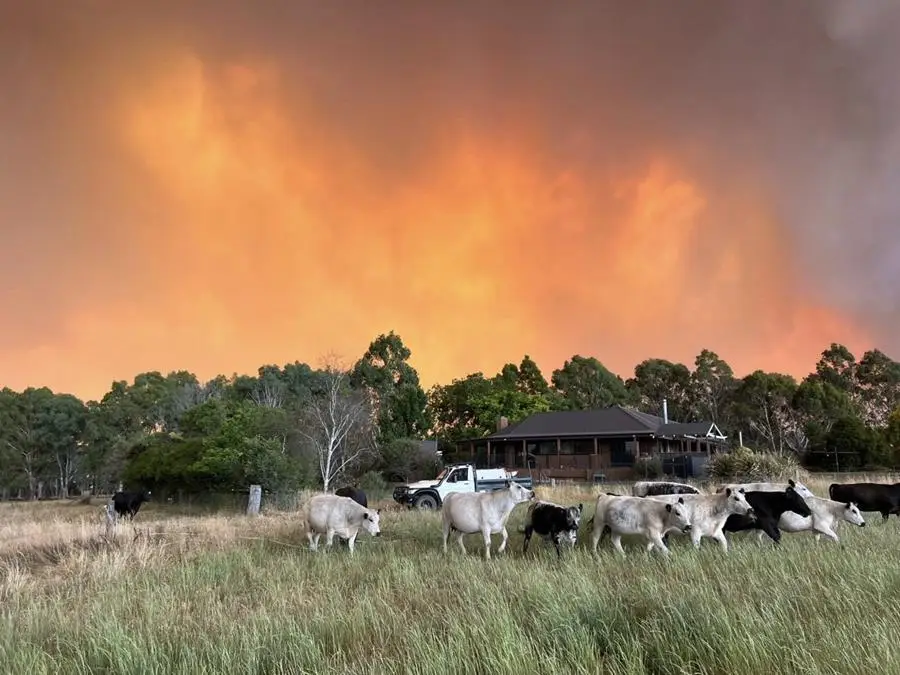
It’s hard to believe just a week ago it was forty plus degrees and fires had burned out 400,000 hectares and destroyed hundreds of homes and buildings.
Around 1000 farms have been fire-affected but once the weather cools and focus shifts its easy to forget about how much damage has been done.
During 2019 Black Summer bushfires CERES worked with the ORICoop Resilience Fund to organise recovery volunteers and raise over $500,000 in cash and feed to help organic farmers with:
- Fodder transport for certified organic fodder (to retain their organic certification)
- Agistment and / or movement of stock to organic land
- Soil tests for remediation strategies
- Biological inputs for soil recovery
- Recovery advice tailored to organic operators
OriCoop founder, Carolyn Suggate, says farmers who were assisted in 2019 have already donated fodder and other resources to help farmers affected by last week’s fire.
The fund has reopened here.
If you need to make a tax deductible donation, are a fire-affected organic farmer or just interested in volunteering in a recovery project please drop Carolyn an email.
Other orgs who are supporting people affected by the fires:
Harcourt Progress Association have launched an official bushfire relief fund collecting donations for displaced people and for food, clothing and bedding – over $175k has already been raised.
Blaze Aid, who help farmers repair burnt fences, are opening a camp in Maldon for volunteers on the 23rd of Jan – get involved they’re an amazing group.
Trust For Nature is helping landowners protect nature on their property with their Bushfire Recovery Appeal.
There’s also Need for Feed helping out with stockfeed and SXC an organic certifier who are waiving audit costs.
Broadsheet also have an article featuring ways to support producers like cider maker Henry Of Harcourt and other businesses who have been burn out.
Have a good week
Chris