Seductive summer pleasures
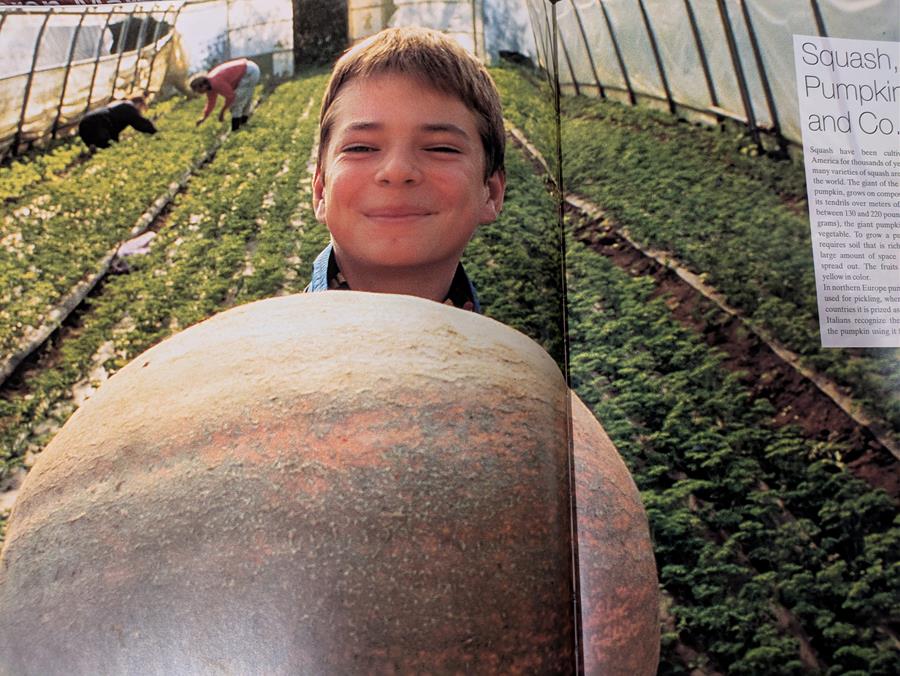
Last week Dre from the CERES marketing team lent me a German encyclopedia-sized book from the 90’s on organic produce and wholefoods. Weighing about as much as a large pumpkin, I drop it on the counter and from the first page I’m immediately at home.
The comprehensive, earnest articles and untouched pre-digital photos on every topic from growing artichokes to smoking tofu feels like something lovingly drawn together from old Grass Roots and Earth Garden magazines.
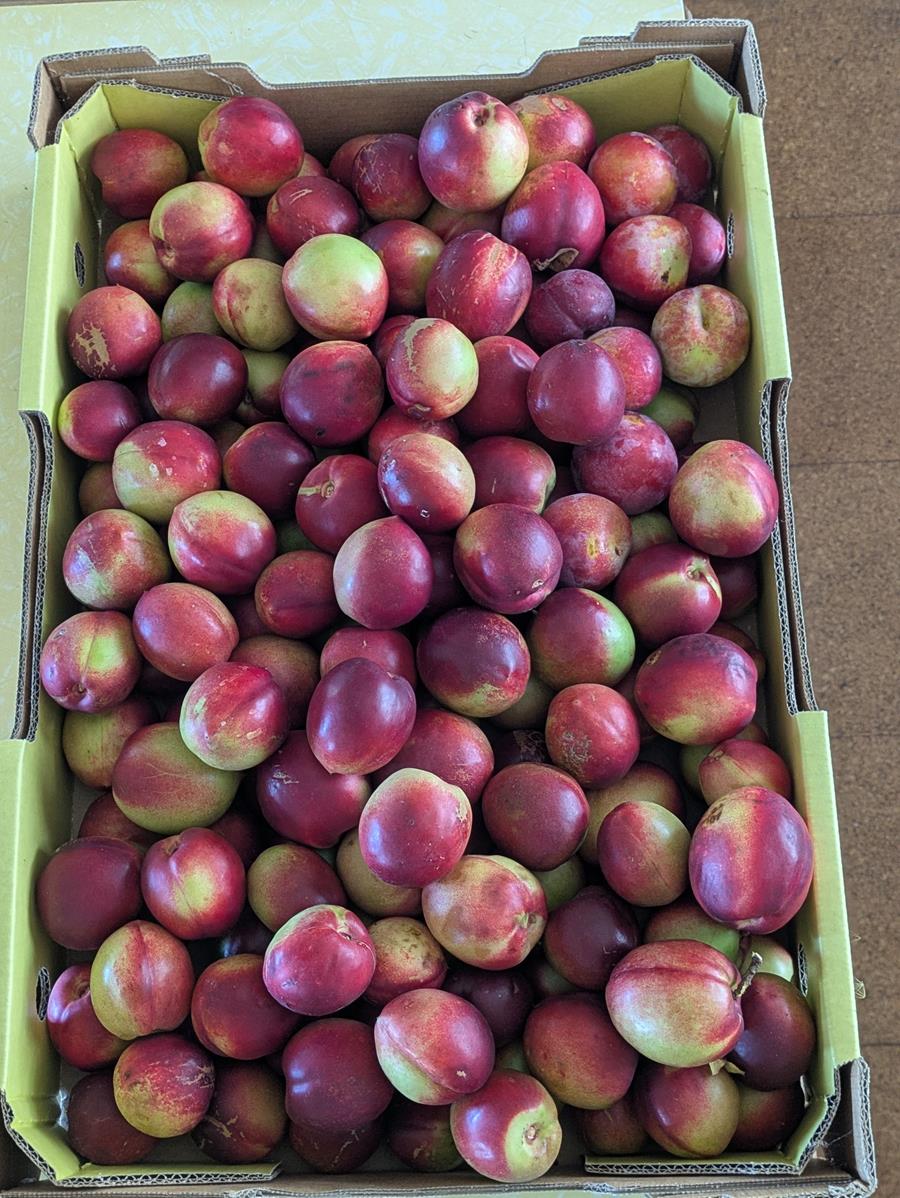
I urgently flip to the stone fruit section titled Southern Pitted Fruit – Seductive Summer Pleasures – in the last week all four of our nectarine trees have simultaneously ripened. And although over two days I manage to eat about fifty, doing something deeply strange to my microbiome, I hardly make a dent.
I’m hoping Dre’s encyclopedia can help us out with some nectarine recipe ideas but instead I get stuck in the pitted fruit history section…
Five hundred years ago Europeans trading/crusading down the Silk Road first come across peaches in Persia (Iran) and apricots in Armenia. They hastily name them prunus persica and prunus armeniaca.
Western botanists run with this nomenclature for hundreds of years until they figure out peaches and apricots originally come from China where they’d been farmed for several thousand years.
Then an absolute bombshell!
I discover nectarines aren’t even an actual fruit species… What the!?
I’d always assumed, and was sure I’d read somewhere, that nectarines were a cross between a peach and a plum.
This, I learn, is an urban pitted-fruit myth – nectarines are in fact mutants (deep down aren’t we all).
Anyway, a recessive gene carried by peaches randomly expresses itself causing nectarines to spontaneously appear on peach trees.
This spontaneous nectarine phenomenon, which has confounded orchardists for centuries, turned out to be nothing more than mutant, fuzz-less peaches.
I’m also surprised to learn that until relatively recently nectarines were a niche fruit, a sweet curiousity perenially outshone by peaches, apricots and plums.
Sadly, it was the nectarine’s beautifully smooth but easily bruised skin that kept them out of our fruit bowls until the 1960’s when private plant breeders alongside University of California researchers developed firmer fleshed varieties for commercial growers.
My reading, fascinating as it is, doesn’t help me find a solution to our nectarine glut and I end up pleading with our neighbours to assist us in eating the thirty kilos we’ve so far picked from just one tree!
Meanwhile, over in the Fair Food warehouse the exact opposite to our nectarine glut has been playing out this summer.
This week, at what should be the peak of the stone fruit season, we’re selling organic nectarines for $29.90 a kilo – in comparison a kilo of IPM spray-free nectarines is going for $10.95.
About at year ago I wrote about retiring organic stone fruit farmers Keith Matthews and Kevin Magaan not being succeeded by new growers and leaving big gaps in the organic fruit market.
High land prices, the increasing size of commercial farms and the years of waiting before an orchard starts producing (about seven) are making it impossible for new farmers to get started.
The gaps are really starting to show this year and will be a continuing challenge for the organic sector for many years ahead.
For the timebeing we are grateful to have IPM stone fruit growers like the Dimit’s in Shepparton keeping us supplied with peaches and nectarines.
Have a great week
Chris