Mill Spring Farm
In December 2014 a lightning strike sparked the Creighton’s Creek Fire that burned more than 5,000 hectares around the township of Ruffy in the Strathbogie Ranges.
During the fire the Martin family’s home at Mill Spring Farm became the bushfire command hub – it also happened to be the middle of cherry season.
Helicopters filled up from their dam, CFA tankers filled up at the packing shed and people and police were constantly coming in and out.
Interviewed later Valda Martin remembered, “At the same time among the smoke and hive of activity we were loading up fruit to go off to market, turning sprinklers on and trying to look after ourselves too!”
When the fire passed Ruffy four houses, many cattle, numerous sheds and kilometres of fences had been lost. People were really shaken.
“We were so fortunate not to lose our house or our trees but that does not account for the challenges we experienced on the day of the fire itself or the recovery of Ruffy and our neighbours,” reflected Valda.
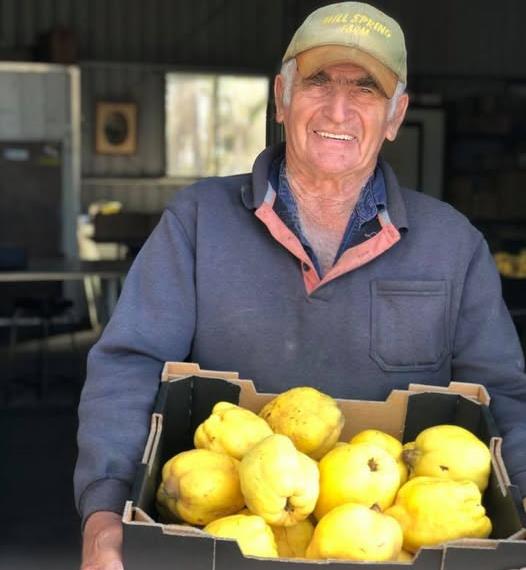
Back in 1992 Valda and Adrian Martin began planting stone fruit on a sunny north-facing Strathbogie slope (that’s Adrian in the pic above).
The couple originally grew flowers but with both being raised in orchard families taking a punt on growing stonefruit on a tired sheep farm seemed like an inevitable move.
They knew all about pesticides and herbicides from growing flowers and so in 1996 the Martins became fully certified biodynamic fruit growers.
Cherries, peaches, plums, apples and quince have been their main crops.
Adrian selected varieties that would ripen sequentially so that apart from cherries he and Valda could handle the picking and packing themselves.
The Martins sold their fruit into the Melbourne wholesale market, direct to retailers and to the visitors who would come to buy direct from their packing shed.
This summer however everything changed – in January sparks from a car trailer ignited dry grass along the Hume Highway.
Whipped up by vicious winds the Longwood fire tore through Ruffy destroying houses, the local school and community centre.
Half the town’s 164 residents either lost their home or a structure in the fire.
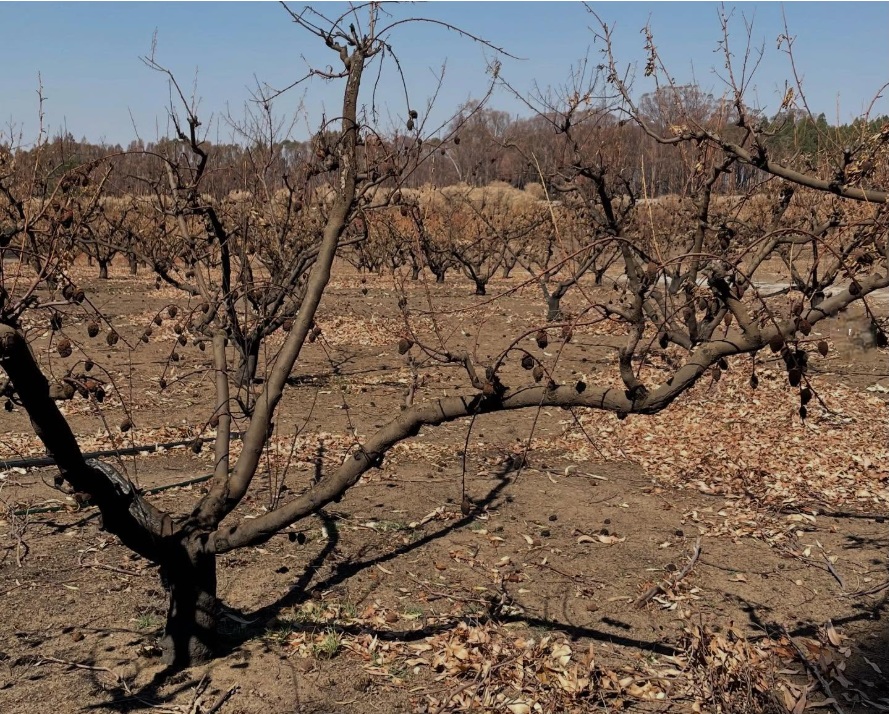
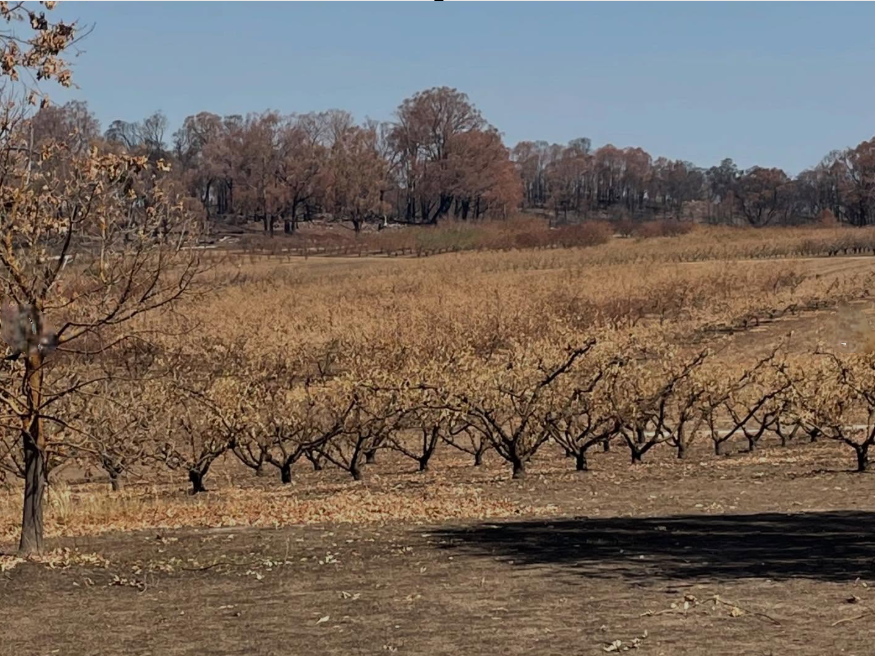
Unlike 2014, Mill Spring Farm did not escape the blaze.
Despite staying to defend the Martin’s home, sheds, fences, and farming equipment all burned.
Their precious biodynamic orchard was severely damaged.
Craig Martin explains how they lost everything, including the tools needed to rebuild, ‘I went to tie something up and didn’t even have a bit of bailing twine’.
If you’ve bought organic stone fruit in Melbourne over past 30 years then you’ve most likely eaten Adrian and Valda’s plums, peaches or cherries.
Recently I’ve been writing a lot about how we’re losing our organic and biodynamic stone fruit growers – losing the Martins as well would be a tragedy.
A GoFundMe page has been created to help support Adrian and Valda restore their orchard and rebuild their buildings and fences.
You can find the link here.
Have a great week
Chris
Here are few other ways to support people affected by the January fires:
The ORICoop Resilience Fund helps organic farmers get free certified organic fodder, agistment, soil tests, recovery advice and organises fire recovery volunteers.
Harcourt Progress Association’s official bushfire relief fund collects donations of food, clothing and bedding and has raised over $375,000 so far.
Blaze Aid are an amazing group connecting volunteers with farmers to repair burnt fences and infrastructure – they’re currently looking for people to join volunteer camps at Longwood, Alexandra, Bullioh, Walwah and Gellibrand.